
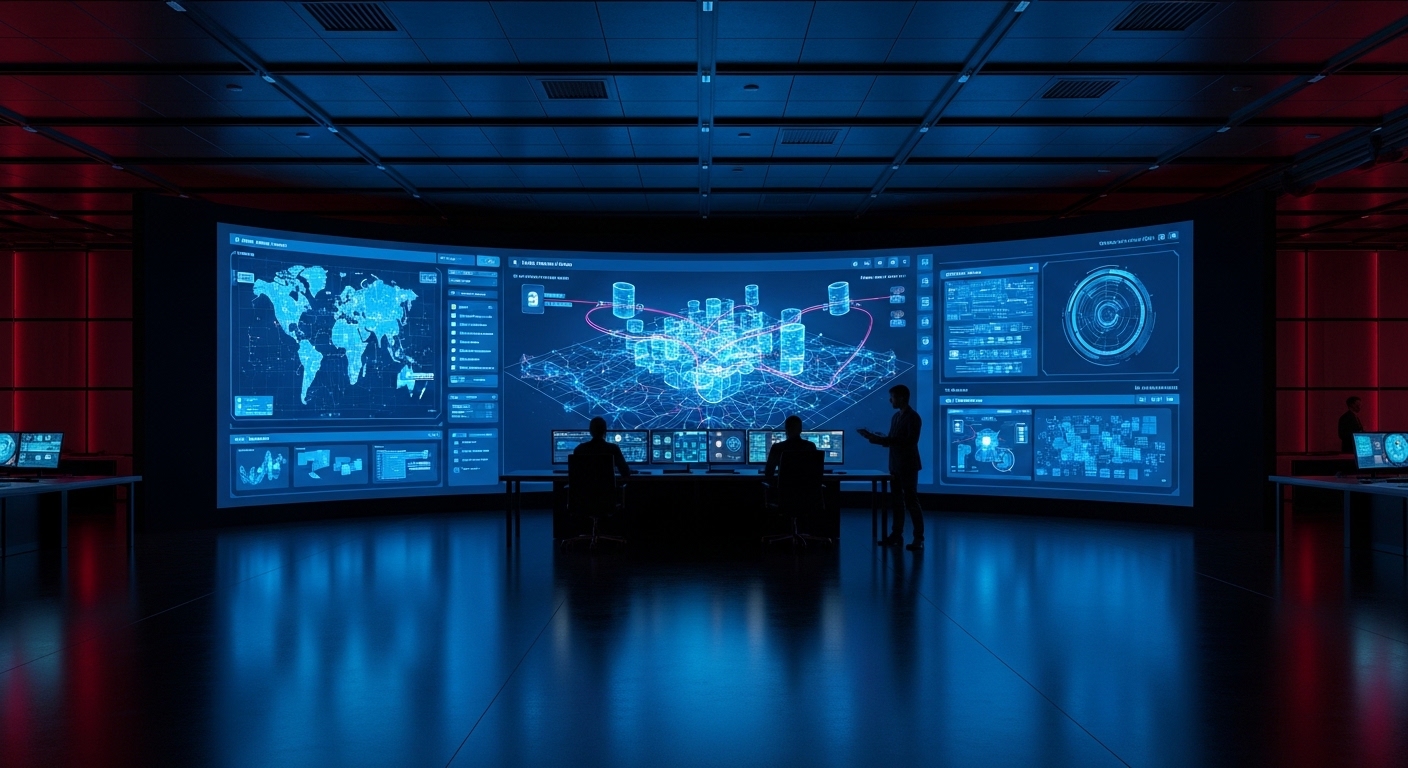
For years, design was mistaken for appearance — a matter of finishes, colors, and visual appeal. But in high-performance environments, design is not surface. It is structure. It is not decoration. It is discipline.
In mission-critical spaces, design is the silent framework that determines whether operations flow — or fracture.
Step inside a truly engineered operational environment and you won’t first notice the materials. You’ll notice the clarity. The absence of friction. The way attention naturally moves toward what matters most. The way teams communicate without obstruction. The way information feels immediate, not overwhelming.
That is not coincidence.
That is deliberate spatial intelligence.
Design at this level is built on behavioral science, ergonomics, cognitive load theory, and environmental psychology. It studies how the eye scans across multi-screen displays. How posture influences endurance. How sound reflection affects reaction time. How lighting temperature impacts alertness across extended shifts.
Every decision is intentional.
A curved video wall is not aesthetic flourish — it preserves visual continuity and reduces neck strain.
Layered lighting is not ambiance — it prevents fatigue and sustains vigilance.
Acoustic zoning is not luxury — it protects communication clarity during peak operational pressure.
Console spacing is not preference — it supports collaboration without crowding cognitive bandwidth.
In high-stakes environments, poor design compounds risk.
Visual clutter delays recognition.
Glare distorts critical data.
Improper ergonomics drains stamina.
Disorganized layouts slow coordination.
Design, when engineered correctly, eliminates these vulnerabilities before they surface.
Modern operational design begins long before construction. It starts with workflow mapping. Scenario simulation. Crisis modeling. Movement pattern analysis. It asks:
- Where does attention need to land first?
- How wil
- What happens when pressure spikes?
- How does the room behave under stress?
The environment is then constructed not around furniture — but around performance.
Technology is integrated, not installed. Displays align with hierarchy. Control consoles mirror operational roles. Infrastructure disappears into seamless architecture. The room becomes a unified system rather than a collection of components.
This is the evolution from interior design to performance engineering.
Design is no longer about how a room looks in a photograph.
It is about how it functions at 3:17 AM during a critical escalation.
It is about clarity when seconds compress.
It is about resilience when pressure intensifies.
The most advanced environments achieve something rare: they feel calm at the exact moment complexity peaks.
That calm is not accidental. It is engineered.
When architecture supports cognition, teams move faster. When ergonomics support endurance, performance stabilizes. When spatial logic supports communication, coordination becomes instinctive.
Design becomes infrastructure — as vital as the systems it houses.
Because in mission-critical operations, success is not determined solely by technology or talent. It is determined by the environment that binds them together.
And when design is executed with precision, foresight, and strategic intent, it does something extraordinary:
It disappears.
Leaving only focus.
Only clarity.
Only performance.