
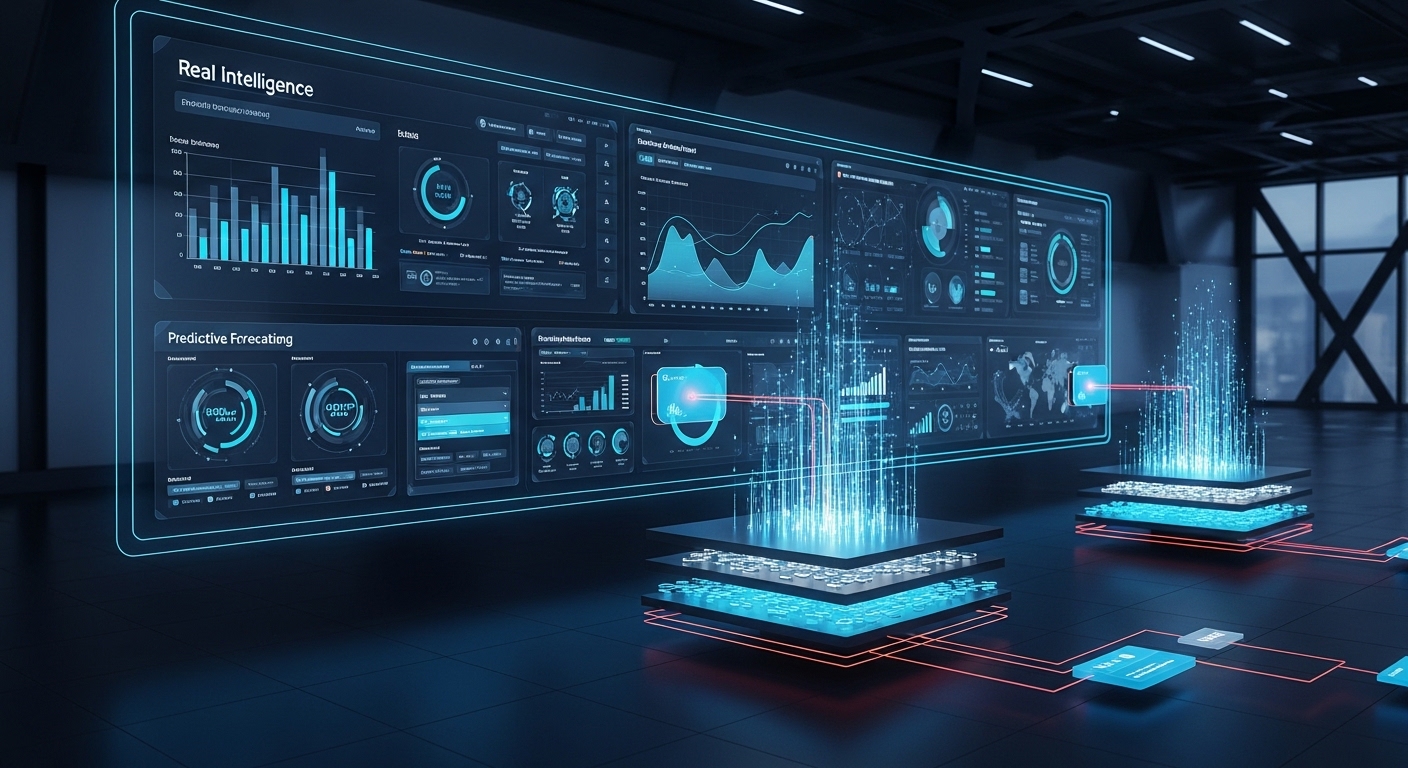
There was a time when data analysis meant reports — static charts generated at the end of the month, reviewed in meetings, archived, and forgotten. Insights arrived late. Decisions relied on instinct. Patterns were discovered only after impact.
That era is gone.
Today, data analysis is not retrospective.
It is predictive.
It is operational.
It is strategic intelligence embedded at the core of performance.
Modern organizations no longer struggle with a lack of data. They struggle with excess. Streams flow continuously from transactions, user interactions, IoT sensors, supply chains, financial systems, and digital platforms. Raw information is abundant.
Clarity is rare.
Strategic data analysis transforms complexity into coherence.
It consolidates fragmented datasets into unified intelligence layers.
It structures information around decision pathways.
It identifies correlations invisible to human intuition.
It forecasts risk before exposure becomes damage.
A sudden revenue fluctuation is not just reported — it is dissected across customer segments, geographic distribution, behavioral trends, and operational variables.
A supply delay is not simply logged — its ripple effect on forecasting, i
A drop in
This is analysis elevated from measurement to anticipation.
High-performance analytical environments integrate:
- Real-time data pipelines
- Advanced statistical modeling
- Machine learning forecasting
- Anomaly detection systems
- Scenario simulation frameworks
- Data governance and validation protocols
Because inaccurate data does not merely misinform — it misleads.
Strong analytical architecture begins with disciplined data governance. Clean inputs. Defined metrics. Standardized structures. Without integrity at the foundation, sophistication at the surface collapses.
From there, visualization becomes strategic. Dashboards are not decorative — they are cognitive instruments. Visual hierarchy directs attention. KPIs align with objectives. Noise is filtered. Signal is amplified.
The most mature data ecosystems answer three critical questions instantly:
What is happening?
Why is it happening?
What will likely happen next?
That third question defines competitive advantage.
Organizations that analyze only the past remain reactive.
Organizations that model the future shape outcomes.
The shift is decisive.
From descriptive analytics to predictive intelligence.
From siloed reporting to integrated ecosystems.
From data accumulation to insight orchestration.
Data analysis, when executed with precision and foresight, becomes the operational nervous system of the enterprise. It strengthens strategic planning. It refines resource allocation. It accelerates decision velocity.
In volatile markets, speed matters.
In complex systems, clarity matters more.
In competitive environments, foresight defines survival.
The organizations that win are not those with the largest datasets.
They are those who extract meaning first —
who translate signal from noise —
who convert information into direction.
Because in a world saturated with data, advantage belongs to those who understand it — before everyone else does.