
There was a time when IT consulting began after something broke. A system failed. A migration stalled. A breach exposed weakness. Consultants were summoned to repair, restore, and stabilize.
That model no longer sustains modern enterprises.
Today, IT consulting is not emergency response.
It is strategic navigation.
Organizations operate in environments defined by accelerating change — cloud expansion, AI integration, cybersecurity threats, regulatory pressure, data growth, and shifting customer expectations. Technology is no longer a support layer. It is the operational core.
Without alignment, complexity multiplies.
Without architecture, innovation collapses.
Without governance, growth introduces risk.
Strategic IT consulting begins not with tools — but with direction.
It interrogates the business model before selecting the platform.
It studies operational bottlenecks before proposing automation.
It analyzes risk posture before recommending expansion.
It aligns digital investment with measurable performance outcomes.
A cloud migration is not just relocation — it is scalability engineering.
An ERP integration is not just deployment — it is workflow transformation.
A cybersecurity overhaul is not just protection — it is continuity assurance.
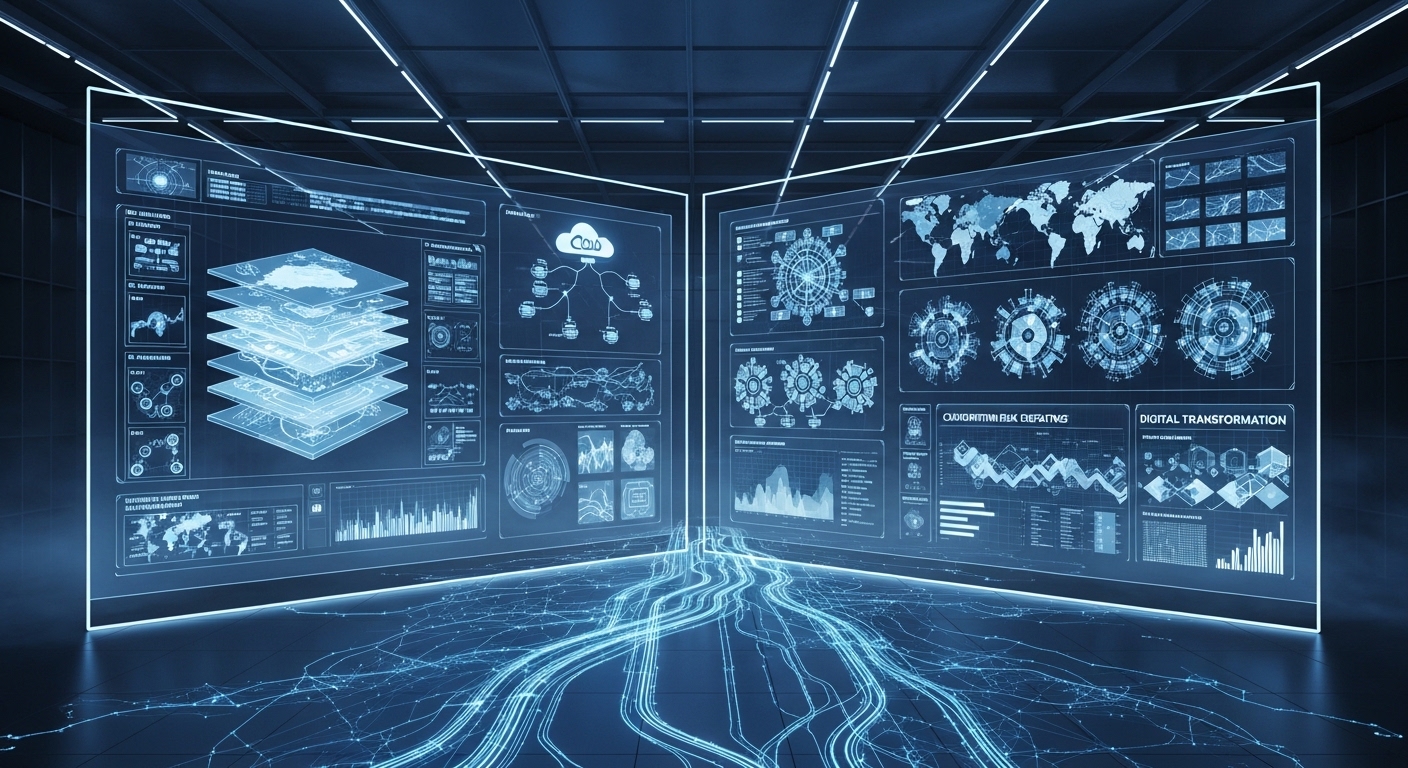
Strong consulting frameworks map the entire ecosystem.
Infrastructure.
Data architecture.
Application layers.
Security posture.
Governance policies.
Future growth projections.
Only when the full landscape is visible can intelligent design begin.
Modern IT consultants operate at the intersection of technical architecture and executive strategy. They translate business ambition into scalable systems. They convert operational friction into automated efficiency. They transform fragmented environments into cohesive digital ecosystems.
Poorly aligned technology becomes silent drag.
Legacy systems resist integration.
Shadow IT creates invisible vulnerabilities.
Overlapping tools inflate cost without increasing capability.
Unstructured data undermines analytics.
Strategic consulting eliminates these fractures before they harden.
It introduces modular architecture that evolves with demand.
It embeds cybersecurity into infrastructure design rather than layering it afterward.
It standardizes governance frameworks to protect scalability.
It implements monitoring systems that provide continuous visibility.
The shift is fundamental.
From reactive troubleshooting to proactive architecture.
From isolated technical advice to enterprise-wide transformation guidance.
From cost center perception to strategic growth catalyst.
The objective is uncompromising: to ensure that technology accelerates vision rather than constrains it.
In volatile markets, adaptability is survival.
In digital ecosystems, integration is strength.
In competitive industries, foresight is advantage.
IT consulting, when executed with rigor and foresight, becomes the structural backbone of digital confidence. It reduces uncertainty. It strengthens resilience. It enables innovation without sacrificing stability.
Because in modern enterprises, technology does not merely support strategy.
It defines it.
And the organizations that navigate complexity with clarity are not those with the most tools —
but those with the most intelligent architecture behind them.