
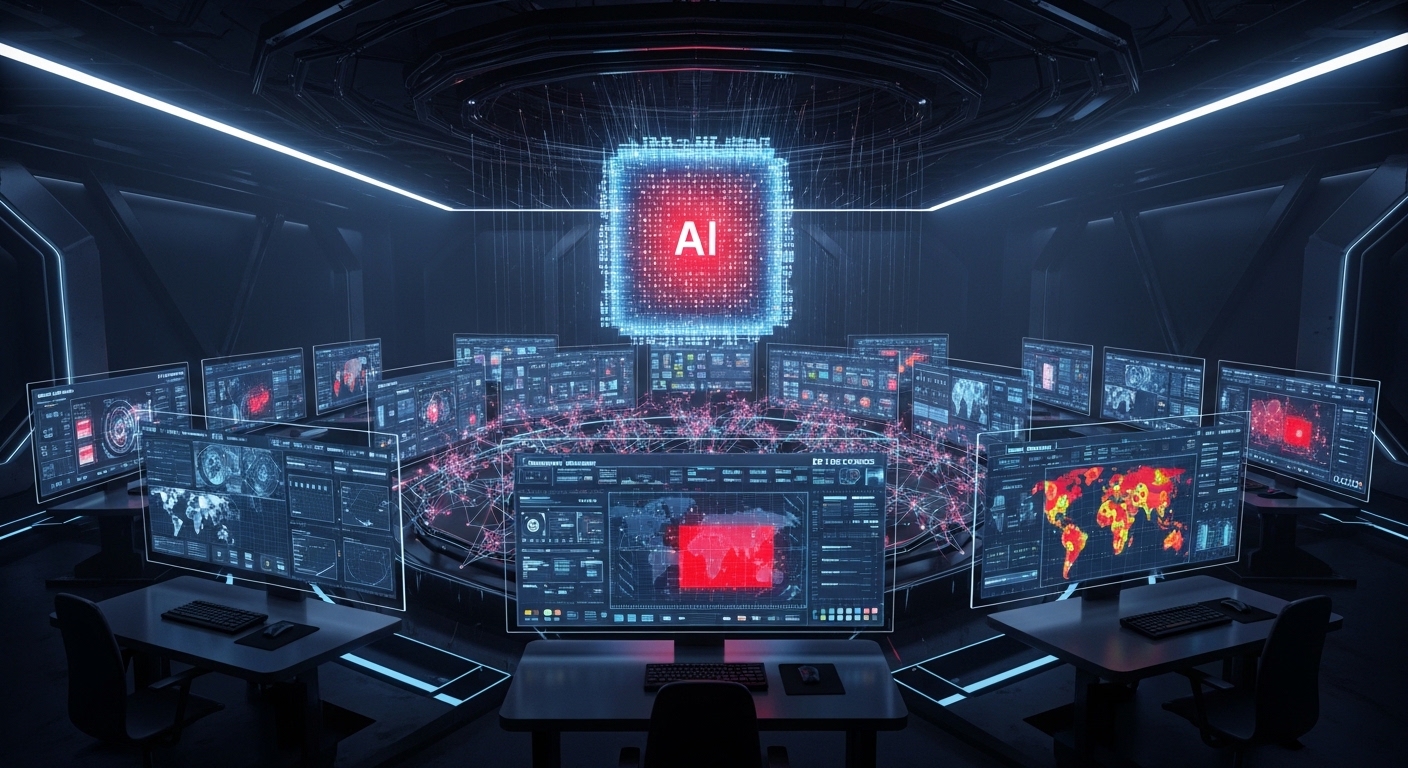
Cyber threats have evolved far beyond manual exploitation. Today’s attackers leverage automation, artificial intelligence, and machine learning to scan infrastructures, generate sophisticated phishing campaigns, and exploit vulnerabilities at machine speed. Traditional signature-based defenses—built around recognizing known attack patterns—struggle to counter threats that constantly mutate and adapt.
AI-driven threat detection transforms cybersecurity from reactive identification to behavioral intelligence. Instead of asking whether an attack matches a known signature, AI systems evaluate whether activity deviates from established norms. This shift from pattern recognition to anomaly detection enables earlier and more adaptive responses.
Machine learning models continuously analyze network traffic, authentication attempts, endpoint behavior, privilege usage, and data transfer patterns. Over time, they establish behavioral baselines for users, devices, and systems. When deviations occur, automated alerts trigger immediate investigation or containment. A login from an unusual geographic location may prompt step-up authentication. Unexpected large-scale data transfers can initiate automated restrictions. Sudden privilege escalation attempts may activate real-time isolation protocols.
Speed is the defining factor in modern cybersecurity. Human analysts cannot manually process millions of security events per second. AI filters background noise, reduces alert fatigue, and prioritizes high-risk anomalies for investigation. This allows security teams to focus on strategic decision-making rather than routine triage.
However, AI is not autonomous protection. Its effectiveness depends on high-quality training data, continuous tuning, and expert oversight. Poorly calibrated models can generate false positives or overlook subtle attack vectors. The strongest defense combines machine precision with human context and judgment.
AI provides scale and velocity. Security professionals provide interpretation and strategy. Together, they create adaptive resilience. In a threat landscape that evolves daily, static defenses quickly become obsolete. AI-driven detection introduces continuous learning into cybersecurity architecture, ensuring that defense mechanisms evolve as rapidly as adversaries.