

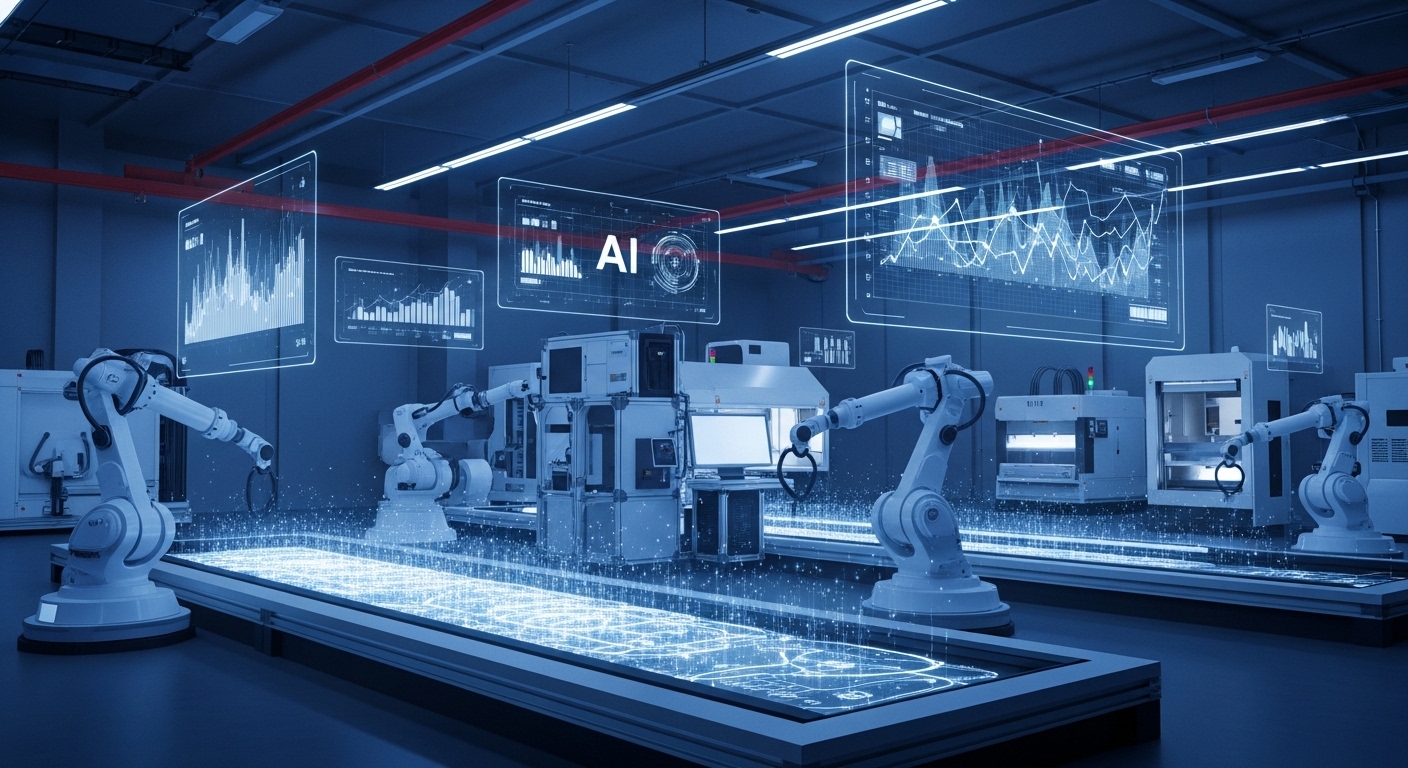
Artificial intelligence (AI) is no longer a futuristic concept — it has become a driving force behind modern industrial transformation. Companies across manufacturing, logistics, finance, and healthcare are leveraging AI to optimize processes, reduce costs, and enhance decision-making.
In manufacturing, AI-powered predictive maintenance monitors equipment performance in real time, detecting anomalies before failures occur. This reduces downtime, extends machinery lifespan, and ensures operational continuity. Machine vision systems inspect quality with unprecedented accuracy, improving production standards and reducing human error.
Logistics and supply chain management benefit from AI-driven route optimization, inventory forecasting, and demand planning. Algorithms analyze historical data, current conditions, and predictive trends to make real-time recommendations, improving efficiency and minimizing waste.
Healthcare is also undergoing a profound transformation. AI algorithms assist in early disease detection, medical imaging analysis, and personalized treatment recommendations. Predictive models identify patients at risk, enabling preventive care that improves outcomes and reduces costs.
Financial services use AI for fraud detection, credit scoring, algorithmic trading, and customer behavior analysis. AI systems can process vast datasets in seconds, identifying patterns that humans might miss. This allows for faster, more accurate, and data-driven decision-making.
AI-powered transformation, however, comes with challenges. Ethical considerations, data privacy, and regulatory compliance are critical. Ensuring transparency and fairness in AI models is essential for sustainable adoption. Organizations must also invest in workforce reskilling to maximize the potential of AI-driven systems.
The future belongs to industries that embrace AI strategically. Integrating AI with human expertise enables smarter operations, better customer experiences, and continuous innovation.