

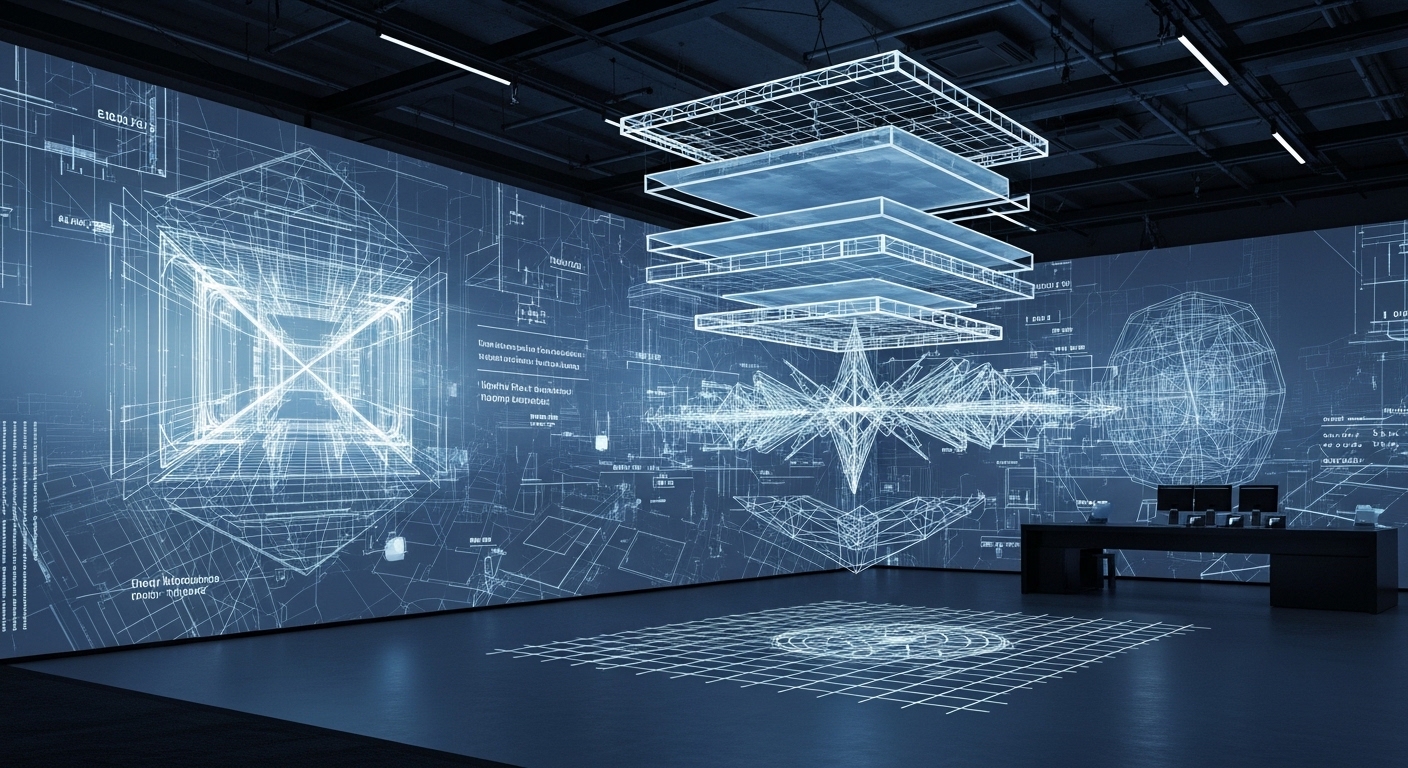
There was a time when design was treated as enhancement — the final layer applied after systems were built and decisions were made. It refined appearance. It improved perception. It polished what already existed.
But in high-performance environments, design is not refinement.
It is foundation.
It determines how people think, how they move, how they collaborate, and how they decide under pressure. It shapes cognition before cognition becomes action.
Design is no longer about how something looks.
It is about how everything works.
Step into a space engineered with intent and you will not first notice color or material — you will notice clarity. Sightlines guide attention naturally. Movement flows without congestion. Information presents itself without effort. The environment feels calm even when operations intensify.
That calm is constructed.
Strategic design integrates spatial intelligence, human factors engineering, ergonomics, lighting science, acoustic modeling, and behavioral psychology into a unified framework. It anticipates friction and removes it before it becomes error.
A poorly positioned display delays recognition.
Improper lighting increases fatigue.
Acoustic interference disrupts coordination.
Clutter fractures focus.
Strong design eliminates these variables before performance is tested.
In mission-critical environments, design becomes operational leverage.
Curved visual structures preserve continuity of attention.
Layered lighting stabilizes alertness across long shifts.
Ergonomic consoles protect endurance and posture integrity.
Material selection reduces glare and acoustic reflection.
Every element carries intent. Nothing is accidental.
The most advanced design strategies begin not with sketches, but with simulation. Workflow mapping. Stress scenario modeling. Movement tracking. Cognitive load analysis. They ask:
Where will attention land first?
How will teams escalate under pressure?
Where could hesitation emerge?
How can complexity feel intuitive?
The environment is then constructed around performance metrics, not aesthetics.
Technology is embedded seamlessly. Infrastructure disappears into architecture. Spatial symmetry reinforces hierarchy. The room becomes an instrument — tuned for clarity, precision, and resilience.
This is the evolution from interior design to performance architecture.
From styling to systems thinking.
From decoration to discipline.
From space to strategy.
The objective is uncompromising: to build environments that amplify human capability rather than constrain it.
In high-stakes operations, performance is fragile. It depends on cognition under pressure, coordination without confusion, and decisions without delay.
Design, when executed with rigor and foresight, becomes invisible infrastructure. It reduces cognitive drag. It stabilizes attention. It strengthens communication. It sustains endurance.
Because true design is not what captures attention.
It is what protects it.
And when precision, clarity, and strategy converge, design stops being visual.
It becomes structural.
It becomes decisive.
It becomes the silent force that allows performance to happen — flawlessly.