

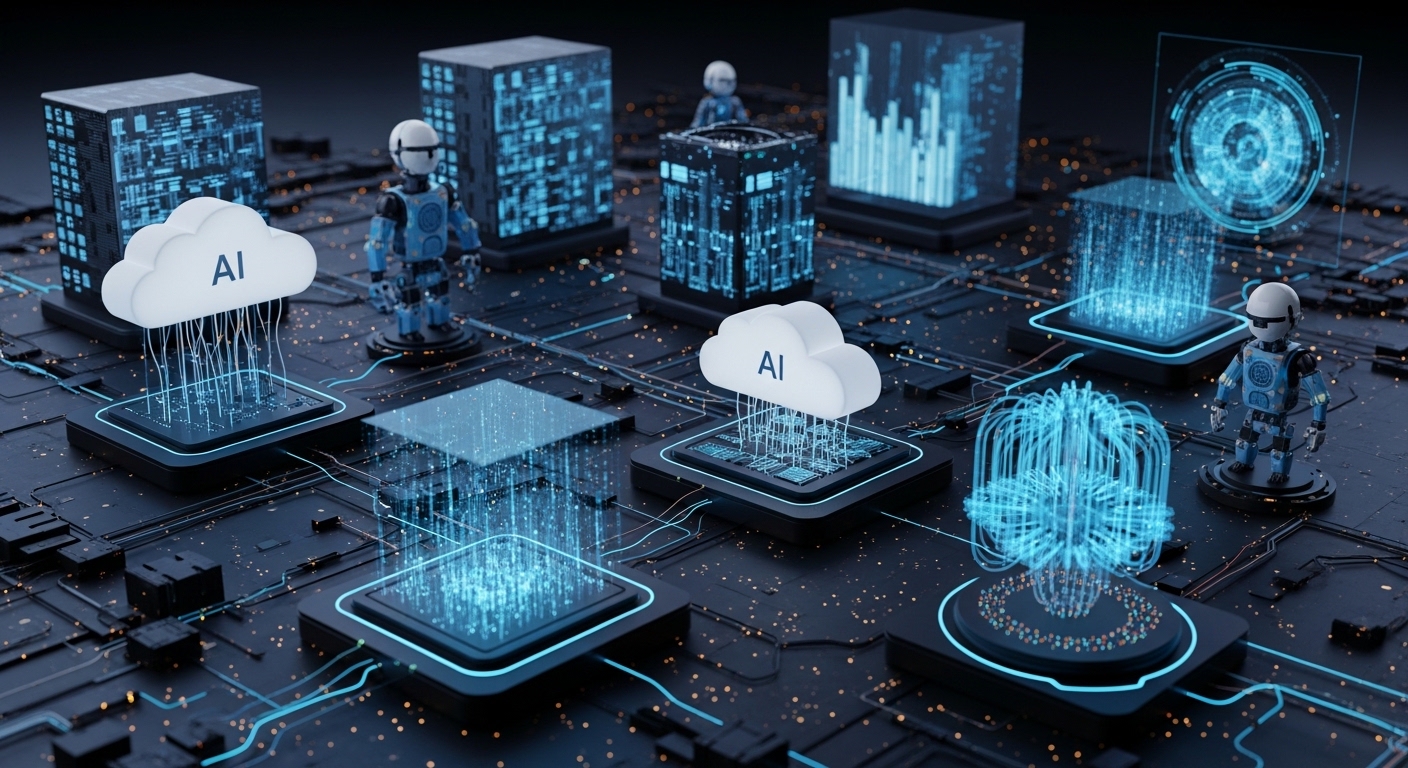
Technology is evolving at an unprecedented pace, reshaping the way businesses, governments, and individuals operate. Emerging trends in areas such as artificial intelligence, cloud computing, edge technology, and quantum computing are not only increasing efficiency but also creating entirely new possibilities for innovation.
Artificial intelligence (AI) is at the forefront of this transformation. Machine learning algorithms and neural networks now power predictive analytics, automation, natural language processing, and personalized user experiences. Businesses leverage AI to optimize operations, enhance customer service, and identify market opportunities before competitors do. Similarly, AI-driven cybersecurity solutions detect threats in real time, providing proactive defense against increasingly sophisticated attacks.
Cloud computing continues to redefine scalability and accessibility. Organizations can now deploy infrastructure, platforms, and software applications on-demand without heavy upfront investment. Hybrid cloud models allow secure data sharing between private and public environments, improving collaboration and reducing operational costs. Edge computing further complements this by processing data close to the source, enabling faster decision-making in IoT, industrial automation, and real-time analytics.
Quantum computing, though still in its early stages, promises to revolutionize computation. Its ability to process complex algorithms exponentially faster than classical computers could unlock breakthroughs in pharmaceuticals, climate modeling, cryptography, and materials science. Early adopters are already experimenting with quantum algorithms to optimize supply chains and simulate high-dimensional datasets.
Technology is not limited to new devices or software; it also drives organizational transformation. Digital twins, robotics, blockchain, and 5G connectivity create integrated ecosystems where operations, data, and AI converge. Companies embracing these innovations gain competitive advantages, improved efficiency, and enhanced agility.
However, technological advancement comes with challenges. Security, ethical concerns, and regulatory compliance are critical considerations. As systems become more complex, maintaining transparency, data privacy, and responsible AI practices is essential.
Staying ahead in technology requires continuous learning, adaptation, and strategic investment. Organizations that embrace emerging trends while balancing risk management can transform potential disruption into opportunity.