

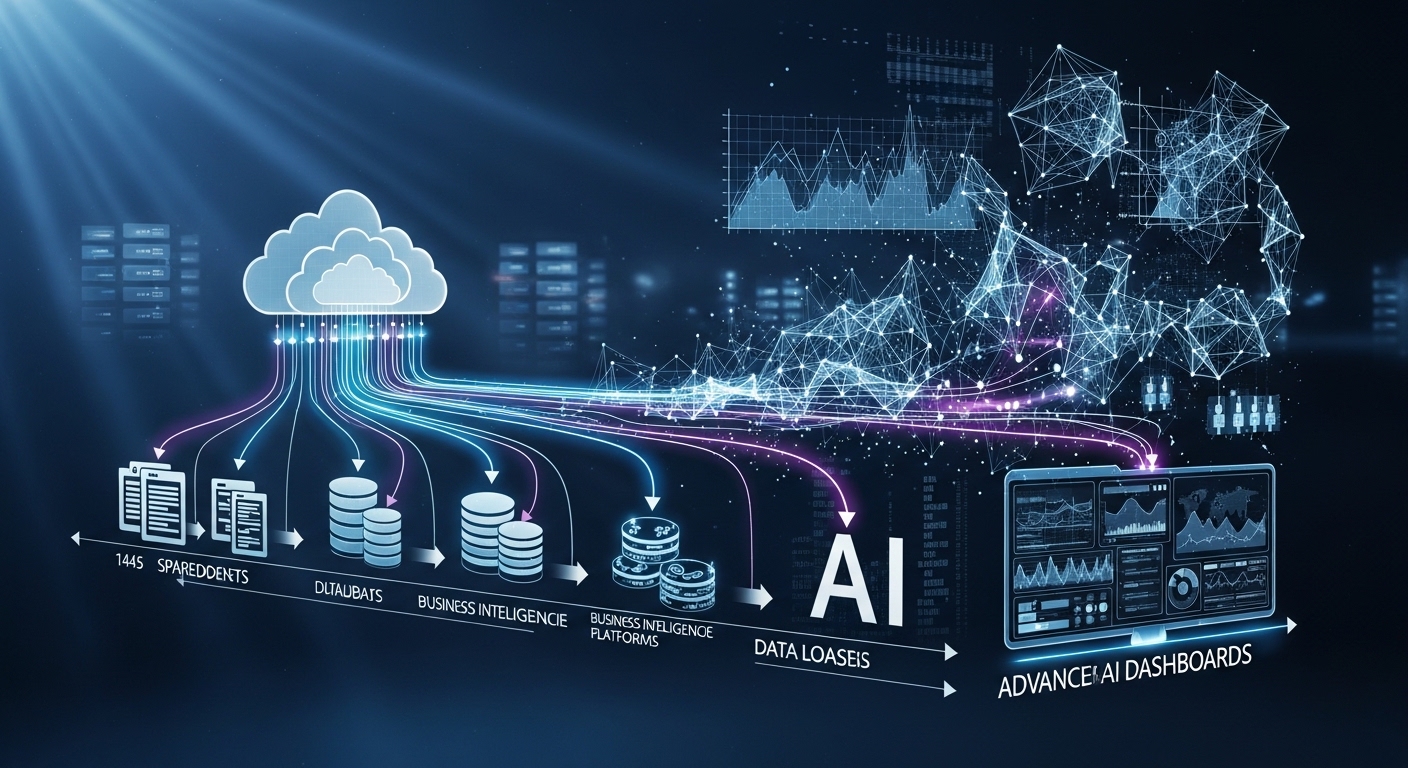
Data Analysis has undergone a profound transformation over the past two decades. What began as basic spreadsheet reporting has evolved into a strategic discipline that shapes executive decisions and defines competitive positioning. In today’s digital economy, data is no longer a secondary output of operations—it is a core asset that fuels innovation, efficiency, and long-term growth.
In its early phase, analysis centered on descriptive insights. Organizations relied on historical data to understand past performance. Reports summarized revenue trends, customer acquisition rates, operational metrics, and key performance indicators. While this provided visibility, it remained inherently reactive, offering hindsight rather than guidance for future action.
The shift toward diagnostic analytics marked a deeper level of sophistication. Analysts began investigating root causes behind performance changes, identifying correlations, anomalies, and contributing variables. Statistical modeling and advanced visualization tools improved clarity, enabling leaders to interpret complex patterns and make more informed decisions.
The true breakthrough emerged with predictive and prescriptive analytics. Predictive models apply machine learning algorithms and statistical forecasting techniques to estimate future outcomes. Businesses moved from asking “What happened?” to “What is likely to happen next?” Prescriptive analytics extends this capability further by recommending optimal actions based on scenario modeling and probability assessments, transforming insight into guided strategy.
Technological innovation has accelerated this evolution. Cloud infrastructure, distributed databases, and AI-driven processing enable real-time analysis of massive structured and unstructured datasets. Organizations can now integrate transactional data, behavioral signals, and external intelligence at scale.
Yet technology alone is insufficient. Data quality, governance, and ethical oversight remain essential. Inaccurate, biased, or poorly structured data can undermine even the most advanced models.
Ultimately, Data Analysis has shifted from retrospective reporting to strategic foresight. Organizations that cultivate analytical maturity gain the ability to anticipate risks, optimize performance, and innovate with confidence in an increasingly complex digital landscape.