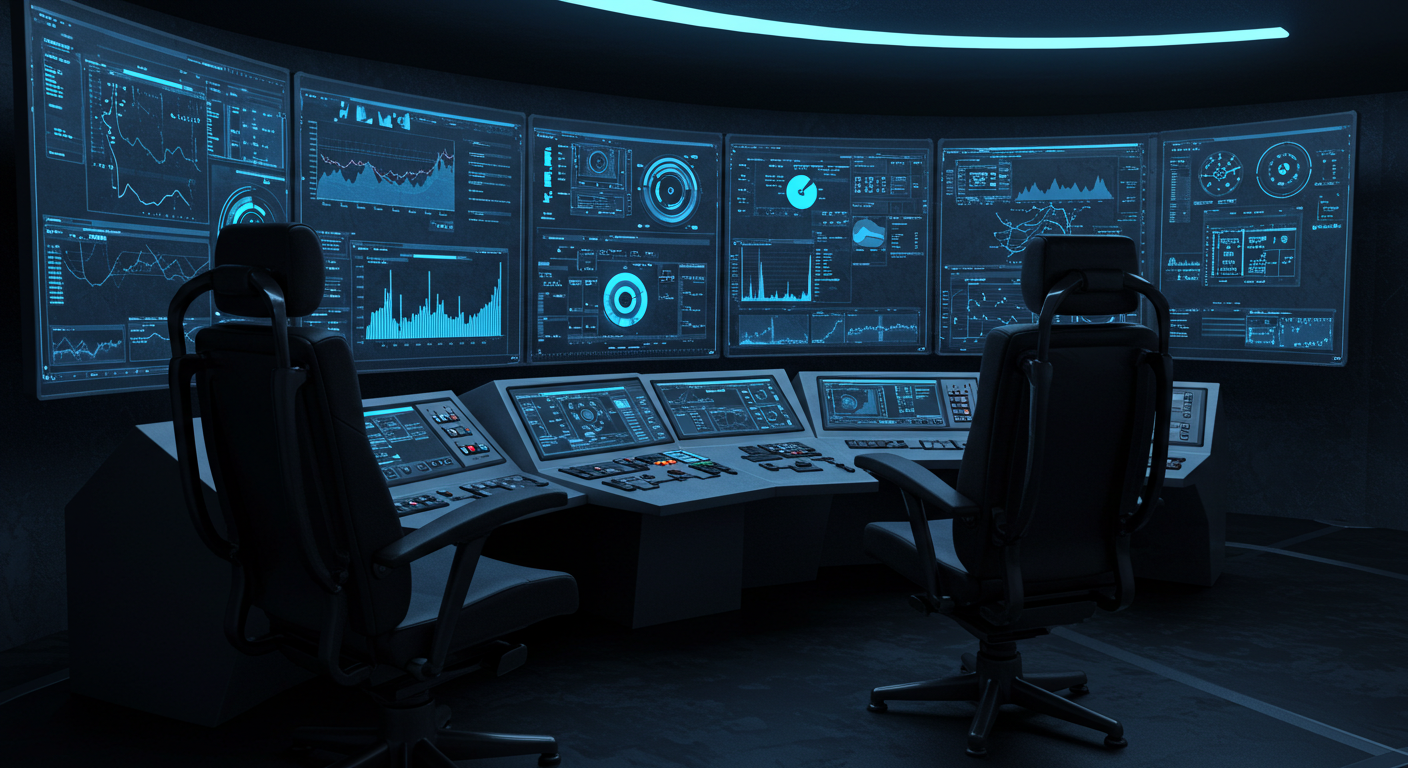

Long before the morning coffee brews or the streetlights dim at dusk, a vast, invisible network stirs to life—power plants ramping up, substations balancing load, transmission lines humming with anticipation. At the center of this intricate ballet sits the utility and energy management center, a room where the pulse of modern civilization is monitored, modulated, and protected in real time. Here, operators don’t just watch meters; they listen to the rhythm of the grid itself. A sudden dip in frequency might signal a generator tripping offline. A voltage fluctuation could hint at a failing transformer miles away. These are not abstract data points; they are symptoms of a living system under stress. The command center’s role is to interpret these signals with precision and respond before imbalance becomes outage. This requires more than technical skill—it demands a deep, intuitive understanding of how generation, transmission, and consumption interact across regions and time zones. Renewable integration adds another layer of complexity: solar output wanes with cloud cover, wind turbines spin unpredictably, and battery storage must be deployed with surgical timing. The control room synthesizes all this into a single, dynamic picture—overlaying weather forecasts, market prices, maintenance schedules, and real-time telemetry onto geographic maps that stretch across states or nations. Alarms are intelligent, not just loud; they distinguish between a routine fluctuation and a cascading failure in the making. Operators collaborate seamlessly with field crews, dispatching technicians not after a blackout occurs, but when predictive analytics flag a component nearing end-of-life. The ultimate measure of success in these centers is silence—the absence of calls from frustrated customers, the uninterrupted glow of city skylines, the quiet confidence that when you flip a switch, light appears. It is a responsibility carried without fanfare, yet it underpins everything from hospital life support to digital commerce. In this room, energy is not just a commodity; it is a current of trust, flowing steadily because someone, somewhere, is watching the pulse—and keeping it strong.