
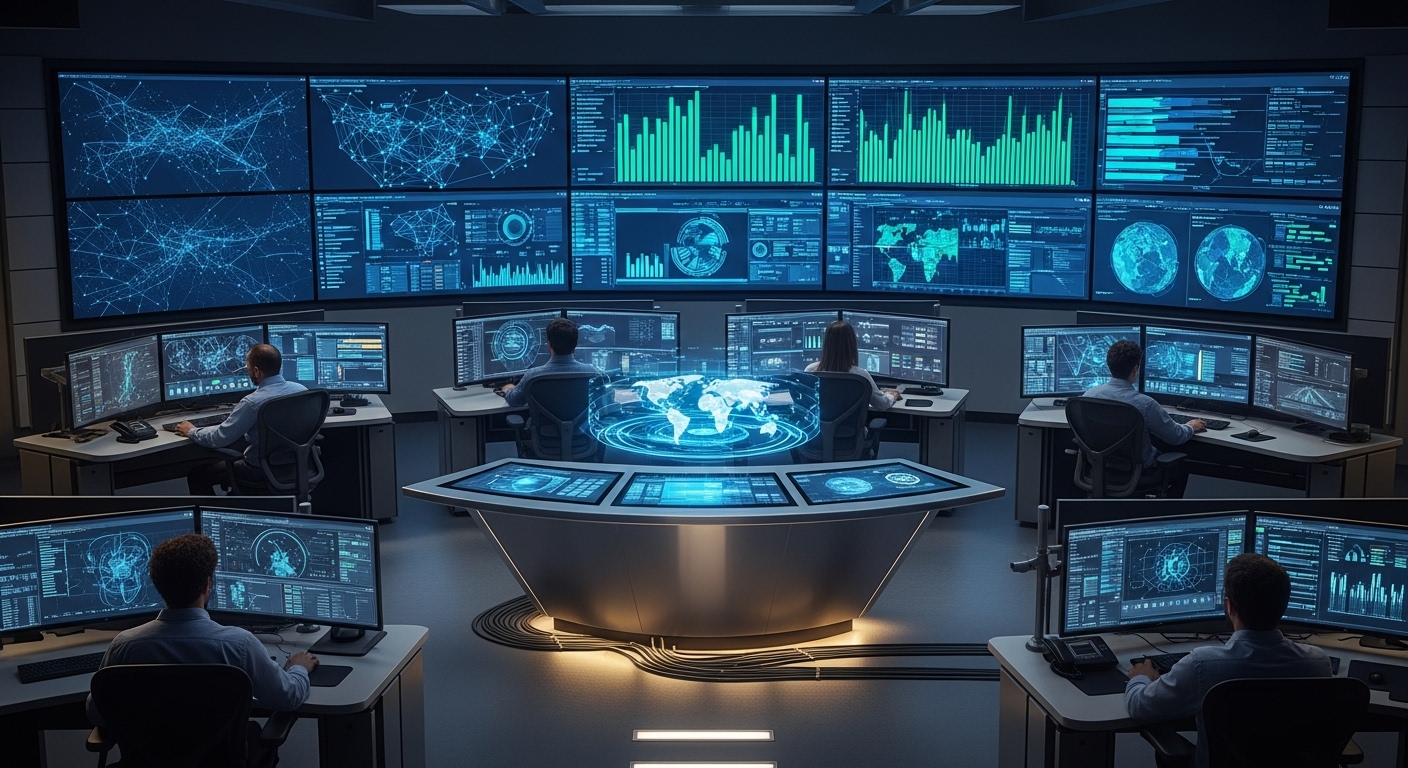
Advanced data analytics is reshaping control room operations by enabling organizations to extract meaningful insights from complex and high volume data streams. As systems become increasingly interconnected, the ability to process, analyze, and interpret information in real time has become essential for maintaining efficiency and reliability. Data analytics provides a structured foundation for understanding system behavior, identifying trends, and supporting informed decision making across all levels of an organization.
By consolidating data from multiple sources into centralized platforms, control rooms gain a comprehensive and unified view of operations. This visibility allows teams to monitor performance indicators, detect irregularities, and respond to incidents with greater speed and accuracy. Visualization tools such as dashboards, charts, and real time reports simplify complex datasets and make insights accessible to both technical and non technical stakeholders.
Predictive analytics and machine learning further enhance operational capabilities by analyzing historical and live data to forecast potential outcomes. This enables proactive strategies that reduce risks, prevent disruptions, and improve planning. Instead of reacting to problems after they occur, organizations can anticipate challenges and act in advance.
Data analytics also supports continuous improvement by evaluating historical performance, identifying inefficiencies, and refining workflows over time. In addition, it strengthens security through continuous monitoring of system activity and detection of unusual patterns that may indicate threats. With accurate insights and timely intelligence, control rooms evolve into intelligent environments where decisions are faster, smarter, and more reliable, driving long term operational excellence and sustainable growth. Organizations can further integrate automation, governance frameworks, and data quality management to ensure consistency across all analytics processes. As data ecosystems expand, scalable architectures and real time processing capabilities become essential for maintaining performance, enabling control rooms to adapt efficiently, support growth, and sustain accurate insights across evolving operational demands. This ensures resilience, clarity, and strategic alignment.